

With How Level AI Impacts Everyday Technology at the forefront, this paragraph opens a window to an amazing start and intrigue, inviting readers to embark on a storytelling journey filled with unexpected twists and insights. From smart home devices to healthcare and transportation systems, AI's impact is profound and pervasive in our daily lives.
Impacts on Everyday Technology
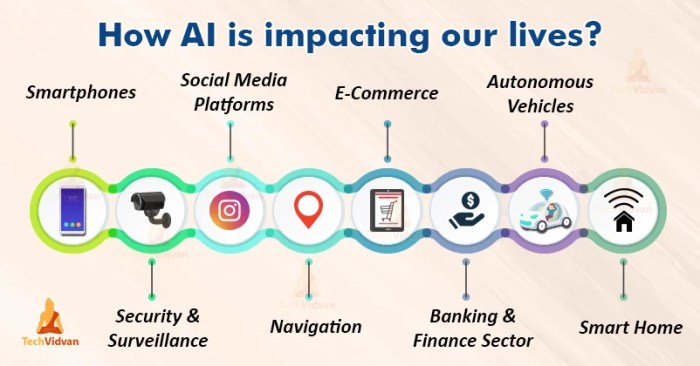
AI has become an integral part of everyday technology, revolutionizing the way we interact with devices and improving user experiences across various platforms. From smartphones to smart home devices, AI applications have significantly enhanced the functionality and capabilities of common devices that we use on a daily basis.
AI Applications in Common Devices
- Smartphones: Virtual assistants like Siri, Google Assistant, and Alexa utilize AI to understand and respond to user commands, perform tasks, and provide personalized recommendations.
- Smart Home Devices: AI-powered devices such as smart thermostats, security cameras, and lighting systems can learn user preferences, adjust settings automatically, and enhance overall convenience and efficiency.
- Streaming Services: Platforms like Netflix and Spotify use AI algorithms to analyze user behavior and preferences, offering personalized recommendations for movies, shows, music, and playlists.
Influence of AI on User Experience in Technology
AI has transformed user experiences in technology by providing more intelligent and intuitive interactions. Through predictive analytics, natural language processing, and machine learning, AI algorithms can anticipate user needs, automate tasks, and deliver personalized content in a seamless manner. This not only enhances user satisfaction but also increases overall efficiency and productivity in various technological applications.
AI in Smart Home Devices
Artificial Intelligence (AI) has revolutionized the way smart home devices function, bringing a new level of convenience and efficiency to everyday life.
Enhanced Functionality
Smart home devices powered by AI can learn user preferences and adapt their behavior accordingly. For example, AI assistants like Amazon's Alexa or Google Assistant can understand voice commands, set reminders, adjust settings, and even anticipate user needs based on previous interactions.
This level of personalization enhances the overall user experience and makes daily tasks easier and more efficient.
Convenience Comparison
When comparing traditional devices to AI-powered ones, the difference in convenience is striking. Traditional thermostats require manual adjustments, while smart thermostats equipped with AI can learn household patterns, adjust temperatures automatically, and optimize energy usage to save costs. Similarly, AI-powered security cameras can detect unusual activity and send alerts to homeowners, providing peace of mind and enhancing home security.
Optimizing Energy Usage
One of the key roles of AI in smart home devices is optimizing energy usage. AI algorithms can analyze data on energy consumption patterns and make real-time adjustments to minimize waste and reduce utility bills. For instance, smart lighting systems can adjust brightness based on natural light levels or occupancy, ensuring energy is not wasted on unnecessary lighting.
AI in Healthcare Technology
AI is significantly impacting healthcare technology by revolutionizing the way medical professionals diagnose, treat, and care for patients. Through the use of artificial intelligence, healthcare systems are becoming more efficient, accurate, and personalized, ultimately improving patient outcomes.
AI-Driven Innovations in Medical Devices
Artificial intelligence has led to the development of innovative medical devices that are transforming the healthcare industry. One example is the use of AI-powered imaging technology, such as MRI and CT scans, to detect and diagnose medical conditions with greater accuracy and speed.
These advanced imaging tools help healthcare providers make more informed decisions and provide better care to patients.Another example of AI-driven innovation in medical devices is the development of wearable health trackers and remote monitoring devices. These devices use AI algorithms to analyze real-time data on a patient's vital signs, activity levels, and overall health status.
By continuously monitoring patients outside of traditional healthcare settings, these devices enable early detection of health issues and personalized interventions, leading to improved patient outcomes
AI in Personalized Patient Care and Treatment
Artificial intelligence plays a crucial role in enabling personalized patient care and treatment plans. By analyzing vast amounts of patient data, including medical history, genetic information, and lifestyle factors, AI algorithms can identify patterns and trends that help healthcare providers tailor treatment plans to individual patients.
This personalized approach not only improves patient outcomes but also enhances the overall patient experience by delivering more effective and efficient care.Overall, AI in healthcare technology is revolutionizing the industry by driving innovation, improving diagnostic accuracy, and enabling personalized patient care and treatment.
With continued advancements in artificial intelligence, the future of healthcare looks promising in delivering better outcomes for patients worldwide.
AI in Transportation Systems
Artificial Intelligence (AI) has significantly impacted transportation technology, revolutionizing the way we travel and commute. By incorporating AI into transportation systems, vehicles and infrastructure have become smarter, safer, and more efficient.
Impact on Transportation Technology
- AI has enhanced safety features in vehicles by enabling predictive maintenance, real-time monitoring, and autonomous emergency braking systems.
- AI algorithms analyze traffic patterns and data to optimize routes, reduce congestion, and improve overall traffic flow.
- AI-powered transportation systems can predict and prevent accidents by analyzing various factors like weather conditions, road conditions, and driver behavior.
Improving Safety and Efficiency
- AI plays a crucial role in enhancing safety by detecting potential hazards, alerting drivers, and even taking corrective actions to prevent accidents.
- AI-driven systems can improve fuel efficiency by optimizing speed, acceleration, and route planning, leading to reduced emissions and cost savings.
- AI technologies like adaptive cruise control and lane-keeping assist help drivers maintain safe distances and stay in their lanes, enhancing overall road safety.
Role in Autonomous Vehicles Development
- AI is at the core of autonomous vehicle development, enabling vehicles to perceive their surroundings, make decisions, and navigate without human intervention.
- Machine learning algorithms continuously improve the performance of autonomous vehicles by learning from real-world driving scenarios and experiences.
- Autonomous vehicles have the potential to revolutionize transportation by reducing accidents, improving traffic flow, and providing mobility solutions for individuals with limited abilities.
Last Word
In conclusion, the integration of AI into everyday technology has reshaped the way we interact with our devices, enhancing convenience, safety, and efficiency. As we continue to witness the evolution of AI applications in various sectors, it is evident that the future holds endless possibilities for technology and innovation.
Answers to Common Questions
How does AI improve user experience in technology?
AI enhances user experience by personalizing interactions, predicting user preferences, and automating tasks to make technology more intuitive and efficient.
What role does AI play in optimizing energy usage in smart homes?
AI analyzes energy consumption patterns, adjusts settings based on usage habits, and suggests energy-saving measures to optimize energy usage in smart homes.
How is AI revolutionizing healthcare technology?
AI is transforming healthcare through diagnostic assistance, treatment recommendations, personalized care plans, and streamlining administrative tasks to improve patient outcomes and operational efficiency.
What insights does AI provide to improve safety and efficiency in transportation systems?
AI enables predictive maintenance, real-time traffic monitoring, autonomous driving capabilities, and route optimization to enhance safety and efficiency in transportation systems.

