

Delving into the realm of Conversational AI in healthcare, this title sets the stage for a deep dive into the world of patient engagement. As we explore the impact of technology in healthcare, get ready for a journey filled with insights and innovations.
Exploring the significance of patient engagement and the role of Conversational AI in revolutionizing healthcare practices, this paragraph offers a glimpse into a future where technology and healthcare converge for the betterment of patient outcomes.
Introduction to Conversational AI in Healthcare
Conversational AI, also known as chatbots or virtual assistants, is a technology that enables machines to engage in human-like conversations. In the context of healthcare, Conversational AI refers to the use of artificial intelligence and natural language processing to interact with patients, provide information, and assist with various healthcare-related tasks.
Effective patient engagement is crucial in healthcare settings as it can lead to better health outcomes, increased patient satisfaction, and improved adherence to treatment plans. Patients who are actively engaged in their healthcare tend to have a better understanding of their conditions, are more likely to follow medical advice, and have a higher quality of life.
Examples of Conversational AI Improving Patient Engagement
- Appointment Scheduling: Conversational AI can help patients schedule appointments, send reminders, and provide information about upcoming visits, reducing no-show rates and improving patient attendance.
- Health Education: Chatbots can deliver personalized health information, answer questions about medications or conditions, and provide resources for patients to learn more about their health, empowering them to make informed decisions.
- Remote Monitoring: Virtual assistants can collect and analyze patient data, such as vital signs or symptoms, and alert healthcare providers of any concerning changes, enabling early intervention and proactive care management.
- Post-Discharge Support: Chatbots can follow up with patients after hospital discharge, answer questions about discharge instructions, medication regimens, and recovery plans, ensuring a smooth transition and reducing readmission rates.
Benefits of Conversational AI for Patient Engagement
Conversational AI offers numerous advantages in improving patient engagement within the healthcare setting. By leveraging advanced technologies, such as Natural Language Processing (NLP) and machine learning, Conversational AI enhances communication between patients and healthcare providers, ultimately leading to better outcomes.
Enhanced Communication
Conversational AI tools, such as chatbots and virtual assistants, facilitate real-time interaction between patients and healthcare professionals. Patients can easily ask questions, schedule appointments, receive medication reminders, and access relevant health information through these platforms. This instant and convenient communication channel leads to improved patient engagement and satisfaction.
Personalized Care
One of the key benefits of Conversational AI is its ability to provide personalized care to patients. By analyzing patient data and preferences, AI-powered systems can offer tailored recommendations, treatment plans, and health advice. This personalized approach not only enhances the patient experience but also improves treatment outcomes by addressing individual needs and concerns.
Increased Patient Satisfaction
Conversational AI plays a crucial role in increasing patient satisfaction levels within the healthcare sector. By offering timely responses, 24/7 availability, and personalized interactions, AI-powered tools make patients feel more valued and engaged in their care. This, in turn, leads to higher levels of patient satisfaction, improved adherence to treatment plans, and better overall health outcomes.
Applications of Conversational AI in Healthcare
Conversational AI is revolutionizing the healthcare industry by enhancing patient engagement through various applications. One of the key areas where Conversational AI is making a significant impact is in improving patient communication and overall experience.
Appointment Scheduling and Reminders
Conversational AI platforms are being used to streamline the process of appointment scheduling for patients. Through chatbots and virtual assistants, patients can easily book appointments, reschedule, or cancel them without the need for phone calls or waiting on hold. These AI-powered systems can also send automated reminders to patients about upcoming appointments, reducing the chances of missed visits and improving overall patient attendance rates.
Remote Monitoring and Follow-ups
Conversational AI tools are proving to be invaluable in remote monitoring of patients, especially those with chronic conditions. By utilizing chatbots and voice assistants, healthcare providers can check in with patients, gather vital health data, and provide necessary guidance or interventions.
This proactive approach enables healthcare professionals to monitor patients' progress, address any concerns in real-time, and offer timely follow-ups without the need for in-person visits.
Challenges and Considerations in Implementing Conversational AI
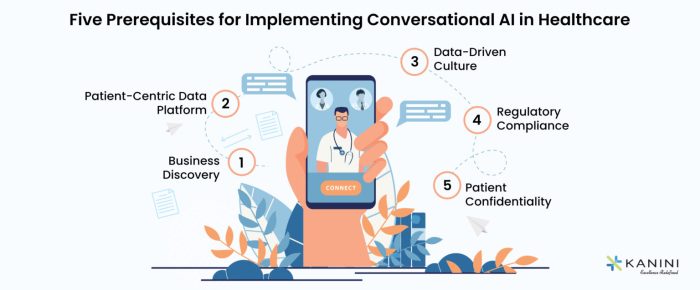
Implementing Conversational AI in healthcare settings comes with its own set of challenges and considerations that must be addressed to ensure successful integration and adoption.
Potential Barriers to Adoption
- Lack of awareness and understanding among healthcare professionals about the benefits of Conversational AI
- Resistance to change and fear of job displacement due to automation
- Initial high costs associated with implementation and maintenance of Conversational AI systems
- Integration challenges with existing healthcare IT infrastructure
Data Privacy and Security
Conversational AI in healthcare requires access to sensitive patient information, making data privacy and security a top priority. It is crucial to implement robust security measures to protect patient data from unauthorized access or breaches. Healthcare organizations must comply with data protection regulations such as HIPAA to ensure patient confidentiality and trust.
Training Healthcare Professionals
Healthcare professionals need proper training to effectively utilize Conversational AI tools in patient care. Training programs should focus on how to interact with AI-powered systems, interpret the data provided, and integrate the technology into their daily workflows. Continuous education and support are essential to maximize the benefits of Conversational AI in improving patient engagement and outcomes.
Future Trends and Innovations in Conversational AI for Patient Engagement
The future of Conversational AI in healthcare holds exciting possibilities for improving patient engagement, enhancing healthcare delivery, and transforming the overall patient experience. As technology continues to advance, Conversational AI is expected to play a crucial role in shaping the future of healthcare.
Integration of Conversational AI with Telemedicine
In the coming years, we can expect to see a seamless integration of Conversational AI with telemedicine services. This integration will enable patients to access healthcare services remotely, engage in virtual consultations with healthcare providers, and receive personalized care and support through AI-powered chatbots.
By combining the capabilities of Conversational AI with telemedicine, healthcare organizations can offer more efficient and convenient healthcare solutions to patients, particularly those in remote or underserved areas.
Potential Impact on Patient Outcomes and Healthcare Delivery
Conversational AI has the potential to significantly impact patient outcomes and healthcare delivery in the future. By leveraging AI-powered chatbots and virtual assistants, healthcare providers can offer personalized care plans, medication reminders, and continuous monitoring to patients. This proactive approach to healthcare can lead to improved patient adherence to treatment plans, better management of chronic conditions, and ultimately, better health outcomes for patients.
Additionally, Conversational AI can help streamline administrative tasks, reduce wait times, and improve overall operational efficiency in healthcare settings.
Last Point
In conclusion, the discussion on How Conversational AI Improves Patient Engagement in Healthcare sheds light on the transformative power of technology in the healthcare landscape. As we look ahead to a future where patient care is enhanced through AI-driven interactions, the possibilities are endless.
Essential FAQs
How can Conversational AI enhance communication between patients and healthcare providers?
Conversational AI facilitates real-time interactions, streamlining communication and enabling more personalized engagement between patients and providers.
What are some specific use cases of Conversational AI in improving patient engagement?
Examples include virtual health assistants for answering patient queries, medication reminders, and post-discharge follow-ups.
What challenges are faced in implementing Conversational AI in healthcare settings?
Barriers include data privacy concerns, ensuring secure handling of patient information, and the need for training healthcare professionals to effectively utilize AI tools.
How might Conversational AI technologies evolve in the healthcare industry?
Future trends suggest increased integration with telemedicine, more advanced natural language processing capabilities, and enhanced patient monitoring through AI-driven solutions.

