

Beginning with Data Robot vs Traditional Machine Learning: Key Differences, the narrative unfolds in a compelling and distinctive manner, drawing readers into a story that promises to be both engaging and uniquely memorable.
As we delve into the realm of Data Robot and Traditional Machine Learning, we uncover the key disparities between these two methodologies that shape the landscape of data analytics and machine intelligence.
Data Robot vs Traditional Machine Learning: Key Differences
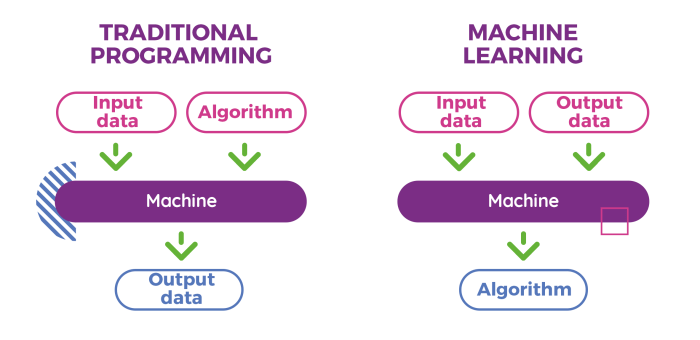
Data Robot is a platform that automates the end-to-end process of building, deploying, and maintaining machine learning models. It leverages automated machine learning (AutoML) to streamline tasks such as data preprocessing, feature engineering, model selection, and hyperparameter tuning.
Fundamental Concepts of Data Robot
- Data Robot simplifies the machine learning workflow by automating repetitive tasks, allowing data scientists to focus on higher-level tasks.
- It utilizes advanced algorithms to optimize model performance without the need for manual intervention.
- Data Robot provides transparency and interpretability, making it easier to understand how models make predictions.
Core Principles of Traditional Machine Learning
- Traditional machine learning involves manual selection and tuning of algorithms, features, and hyperparameters by data scientists.
- It requires extensive domain knowledge and expertise to preprocess data, engineer features, and interpret model outputs.
- Traditional machine learning models are typically more interpretable but may lack the scalability and efficiency of automated approaches.
Comparison of Approaches
- Data Robot accelerates the model development process by automating tasks that would traditionally require significant time and effort.
- Traditional machine learning offers more control and customization but can be labor-intensive and time-consuming.
- Data Robot is ideal for organizations looking to quickly deploy machine learning solutions without extensive manual intervention.
- Traditional machine learning may be preferred in cases where interpretability and control over the modeling process are crucial.
Data Preparation
Data preparation is a crucial step in the machine learning process, as the quality of the data directly impacts the model's performance. In this section, we will explore how Data Robot automates data preparation tasks, compare it to the manual data preparation process in Traditional Machine Learning, and evaluate the efficiency and accuracy of both approaches.
Data Robot
Data Robot simplifies and automates the data preparation process through its user-friendly interface. It offers features such as data cleaning, normalization, transformation, and feature engineering, all of which can be done with a few clicks. Data Robot uses machine learning algorithms to predict missing values, handle outliers, and create new features, making the data preparation process faster and more efficient.
Traditional Machine Learning
In Traditional Machine Learning, data preparation is a manual and time-consuming process. Data scientists need to write code to clean the data, handle missing values, normalize features, and engineer new ones. This process often requires a deep understanding of the data and domain knowledge to make informed decisions.
Manual data preparation in Traditional Machine Learning can be error-prone and tedious, especially when dealing with large datasets.
Comparison
Data Robot's automated data preparation offers a more efficient and accurate approach compared to the manual process in Traditional Machine Learning. By leveraging machine learning algorithms, Data Robot can handle complex data cleaning tasks and feature engineering automatically, saving time and reducing the risk of human error.
Traditional Machine Learning, on the other hand, requires manual intervention at every step, which can be resource-intensive and lead to inconsistencies in the data.Overall, Data Robot's automated data preparation streamlines the machine learning workflow and allows data scientists to focus on model building and analysis rather than data wrangling.
Model Building
Automated machine learning platforms like Data Robot revolutionize the process of model building by streamlining and accelerating the complex tasks involved. These platforms leverage advanced algorithms to automate various stages of the model building process, from data preparation to model selection.
Data Robot’s Automated Model Building Process
- Data Robot starts by automatically analyzing the dataset and identifying the most relevant features for modeling.
- Next, the platform generates multiple machine learning models using different algorithms to find the best performing model.
- Data Robot then fine-tunes these models by optimizing hyperparameters and addressing issues like overfitting.
- Finally, the platform evaluates and compares the performance of the models to select the most accurate one for deployment.
Traditional Machine Learning Model Building
- Traditional machine learning involves manual steps where data scientists or analysts have to perform tasks like feature selection, algorithm selection, hyperparameter tuning, and model evaluation.
- The process typically starts with data preprocessing, followed by splitting the data into training and testing sets.
- Model building in traditional machine learning requires expertise in selecting the right algorithm based on the problem domain and fine-tuning it through iterative adjustments.
- Data scientists then evaluate model performance using metrics like accuracy, precision, recall, and F1 score to assess the model's effectiveness.
“Data Robot's automated model building significantly reduces the manual effort and time required in traditional machine learning processes.”
Speed and Complexity Comparison
- Data Robot's automated model building processes are much faster compared to traditional machine learning, enabling organizations to derive insights and deploy models more quickly.
- Traditional machine learning, while effective, can be time-consuming and labor-intensive due to the manual intervention required at each stage of the model building process.
- Data Robot's approach simplifies model building complexities by handling tasks like feature engineering, model selection, and hyperparameter tuning automatically, making it more accessible to users with varying levels of expertise.
Flexibility and Customization
When it comes to flexibility and customization in machine learning models, Data Robot and Traditional Machine Learning approaches offer different levels of control and automation.
Flexibility in Data Robot
Data Robot provides a high level of flexibility in model customization through its automated machine learning platform. Users can easily experiment with different algorithms, feature engineering techniques, and hyperparameters to fine-tune their models. This flexibility allows for quick iteration and optimization of models without requiring deep expertise in programming or data science.
Flexibility in Traditional Machine Learning
In Traditional Machine Learning, the level of customization available depends on the expertise of the data scientist or machine learning engineer building the models. While it offers more control over the entire modeling process, it also requires a significant amount of manual intervention for tasks like feature selection, model tuning, and deployment.
This manual approach can be time-consuming and may limit the scalability of the models.
Trade-offs between Automation and Customization
The trade-offs between automation and customization in Data Robot and Traditional Machine Learning are evident. Data Robot's automation simplifies the model-building process and accelerates time-to-value, but it may limit the depth of customization possible. On the other hand, Traditional Machine Learning allows for more fine-grained control over model development but requires extensive manual effort and domain expertise.
Finding the right balance between automation and customization is crucial in choosing the most suitable approach for a particular use case.
Summary
In conclusion, the divergence between Data Robot and Traditional Machine Learning is not just about methods but also about the future direction of AI development. Embracing the unique strengths of each approach can lead to innovative solutions that harness the power of data in transformative ways.
FAQ Resource
What sets Data Robot apart from Traditional Machine Learning?
Data Robot utilizes automated processes to streamline data preparation and model building, offering a more efficient and user-friendly approach compared to the manual methods in Traditional Machine Learning.
How does Data Robot enhance flexibility in model customization?
Data Robot provides a wide range of customization options, allowing users to tailor models to specific needs with ease. In contrast, Traditional Machine Learning may require more manual intervention for customization, impacting the overall speed and efficiency of the process.
What are the key trade-offs between automation and customization in Data Robot vs Traditional Machine Learning?
While Data Robot offers automated processes for faster model development, it may limit the level of fine-tuning and customization that can be achieved. Traditional Machine Learning, on the other hand, allows for more granular control over model parameters but at the cost of time and resources.

